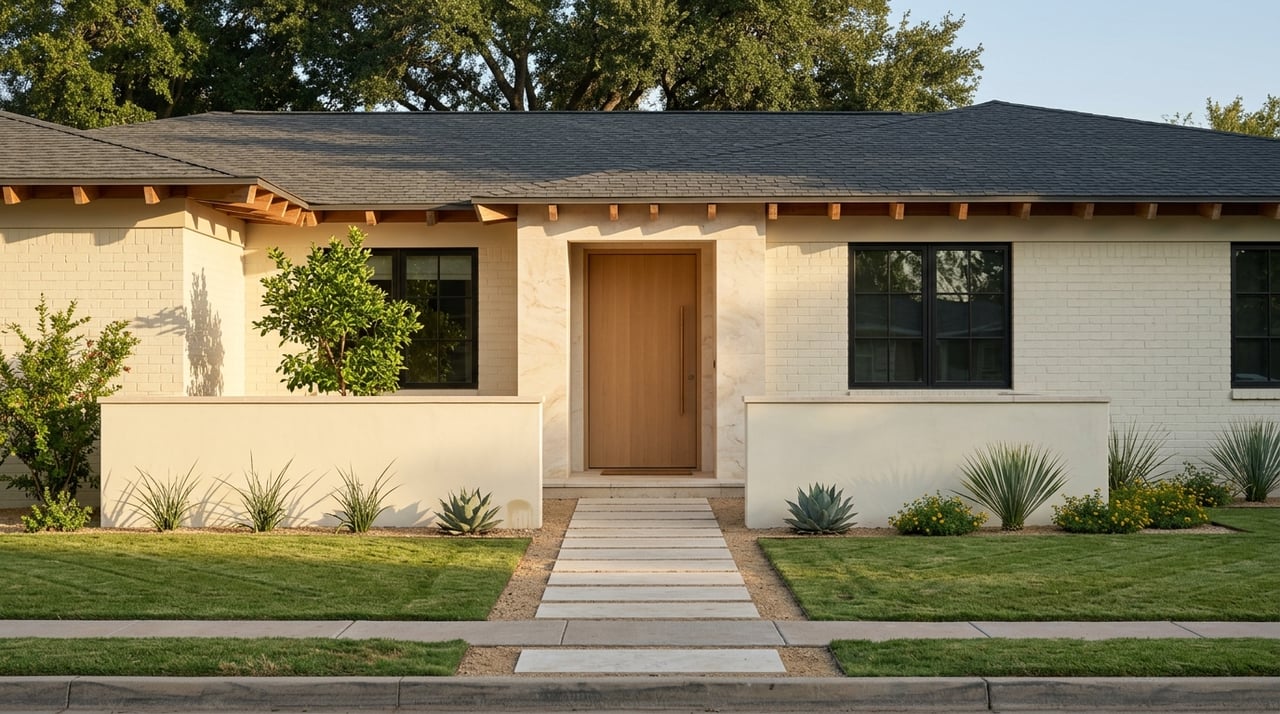
Thinking about buying in Arcadia and wondering what kind of home you are actually looking at? That question matters more here than in many Phoenix-area neighborhoods, because Arcadia is not defined by one look. You will find everything from classic ranch homes to major remodels to newer custom builds, often on large lots with mature landscape and a strong indoor-outdoor feel. This guide will help you understand the main Arcadia home styles, what makes each one distinct, and what those differences can mean for your search. Let’s dive in.
Why Arcadia Has So Many Home Styles
Arcadia started as irrigated citrus land and rural estate property, and that history still shapes how the area feels today. The City of Phoenix historic survey ties Arcadia to the original 1919 plat and describes it as one of the city’s strongest collections of rural estate residences built after Roosevelt Dam.
That early pattern created a foundation of large lots, low-density single-family homes, and mature landscape. It also helps explain why setting matters so much in Arcadia. In many cases, the lot, shade, trees, and outdoor orientation are just as important as the architecture itself.
A major portion of the broader Camelback East Village housing stock was built between 1950 and 1970. Planning materials for Arcadia also note that Phoenix growth reached the area in the mid-1950s, and many of those homes were built well enough that owners chose to renovate rather than relocate.
Classic Arcadia Ranch Homes
For many buyers, the word Arcadia brings to mind the classic ranch home. That makes sense, because many postwar homes in the area are ranch or ranch-adjacent in form.
What Defines a Ranch Home
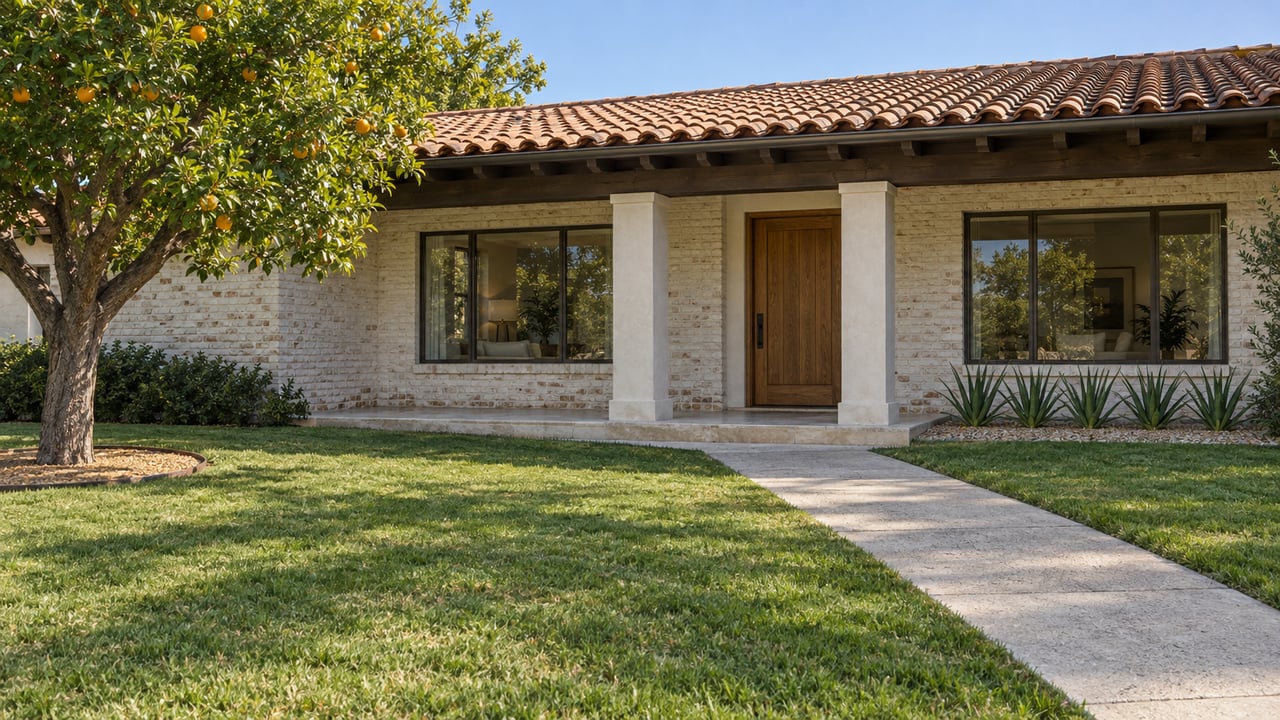
Phoenix historic surveys describe ranch houses as one-story homes with a strong horizontal emphasis. They typically have low-pitched hipped or gabled roofs, masonry construction, shallow porches, and attached carports or garages.
You will also often see steel casement windows, picture windows, simple rooflines, and restrained exterior details. Some homes include brick or painted block walls, low brick planters, tile ridgelines, shutters, or exposed rafter ends.
The overall effect is practical and relaxed rather than ornate. In Arcadia, these homes often sit comfortably on larger lots and connect naturally to patios, shade, and mature trees.
Why Buyers Still Love Arcadia Ranch Homes
A classic ranch often works well because of its livability. Single-story layouts can feel easy to navigate, and the long, low design tends to support a strong connection between indoor and outdoor space.
Many buyers also like the simplicity of these homes. Instead of dramatic exterior styling, the appeal often comes from lot size, layout potential, and the character of the setting.
Not Every Older Arcadia Home Is a Ranch
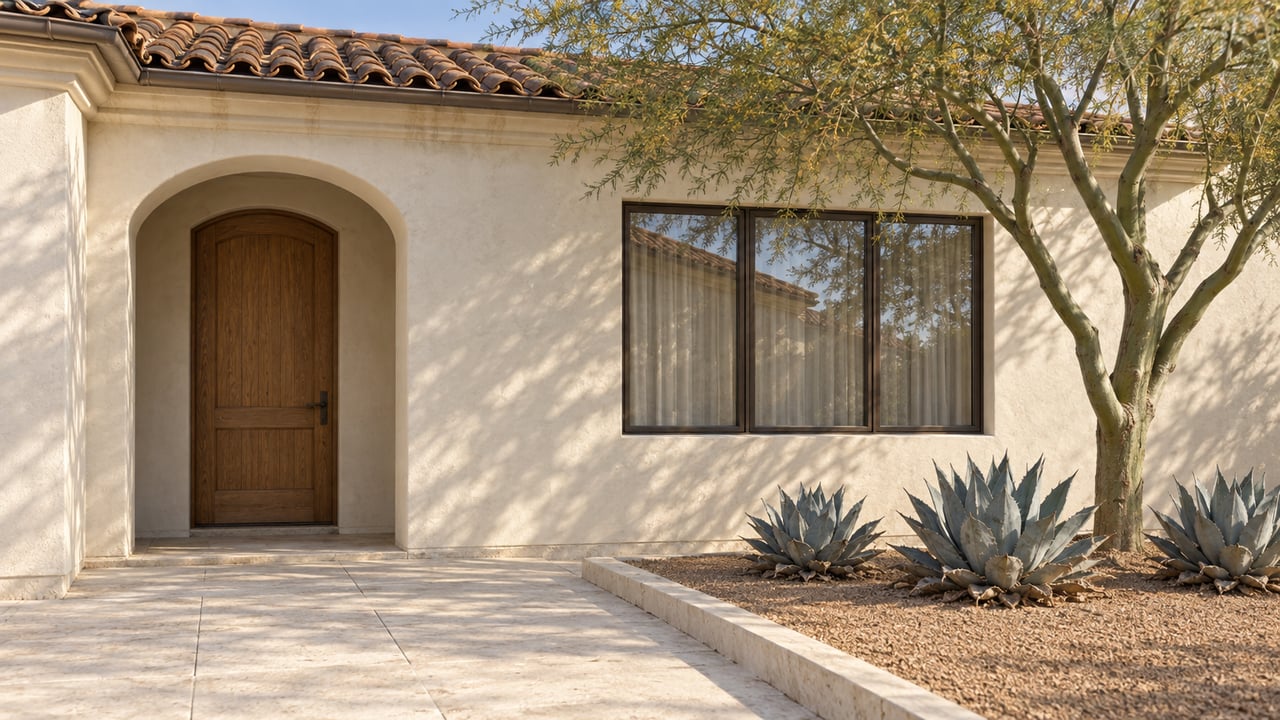
It is helpful to avoid assuming every older home in Arcadia fits the same category. The City of Phoenix Arcadia survey also documents prewar estate homes and Pueblo Revival examples.
That means Arcadia is better understood as a mix of eras and forms rather than a single architectural label. If you are touring homes, you may see one block lean more mid-century while another reflects earlier rural estate roots.
Expanded and Reimagined Ranch Homes
One of Arcadia’s most common housing stories is the remodeled ranch. Instead of tearing everything down, many owners have kept the original lot and parts of the original structure while significantly changing how the home lives.
Planning materials for the area note that the quality of late-1950s and early-1960s construction encouraged many people to renovate instead of move. That pattern has played a big role in the neighborhood’s evolution.
What Changes in a Reimagined Arcadia Home
In practical terms, these homes often keep the low profile and broad footprint of a ranch while updating the interior for modern living. Common changes include opening kitchens and living areas, improving storage, and creating stronger indoor-outdoor flow.
Additions often include larger primary suites, more bathrooms, closets, laundry rooms, pantries, and better use of former carports or patios. In many cases, the home still reads as Arcadia from the street, even if the interior is nearly new.
What Usually Stays the Same
Even after a major remodel, some original elements often remain important. That can include the masonry shell, low roofline, patio orientation, and mature trees.
This is part of why remodeled Arcadia homes can feel so appealing. You may get a more current floor plan without losing the lot character and neighborhood feel that drew people to the area in the first place.
Newer Modern and Contemporary Homes
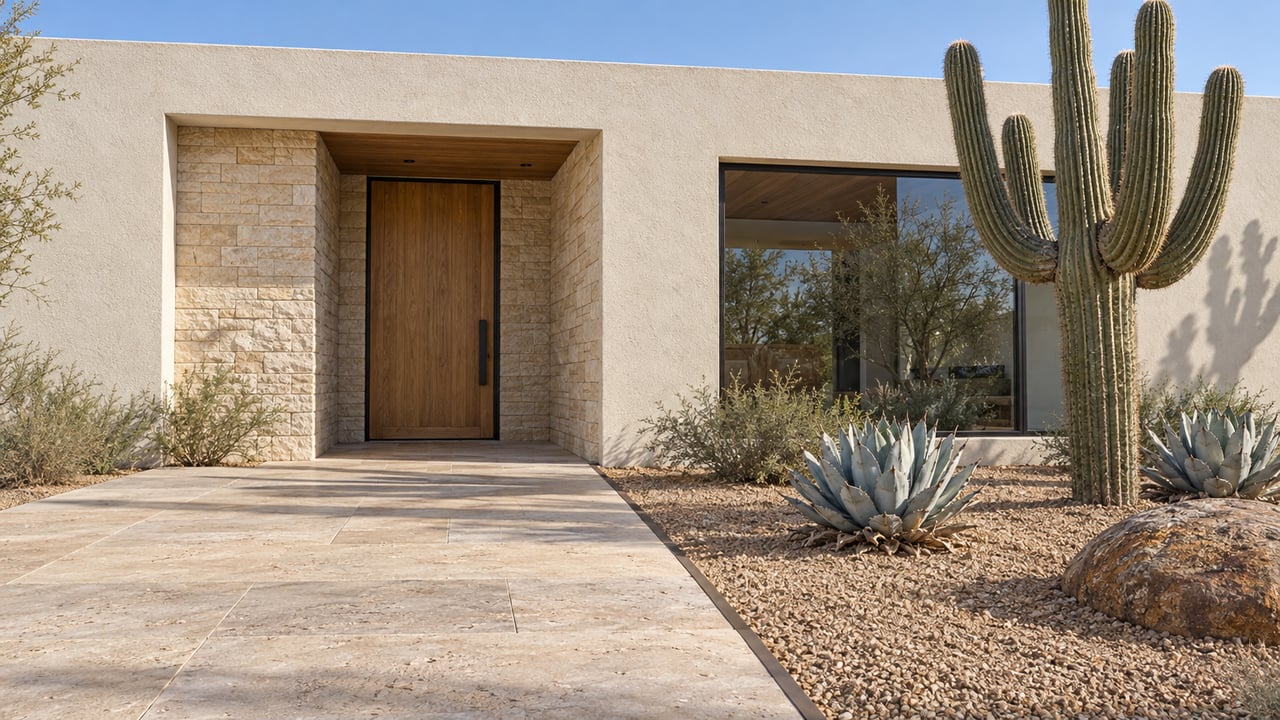
Arcadia also includes newer custom homes and rebuilds, and these often look very different from the original mid-century stock. Instead of trying to copy every historic detail, many newer homes lean contemporary or modern farmhouse in style.
What Newer Arcadia Homes Look Like
Recent Arcadia projects often feature open living areas, generous windows, courtyards, exposed beams, and strong indoor-outdoor continuity. Materials can include stucco, wood, concrete, steel, and stone.
You may also notice cleaner lines, larger glass openings, and more flexible floor plans. Some homes use retracting glass and multiple courtyards to capture light, shade, and views.
How Newer Homes Fit the Area
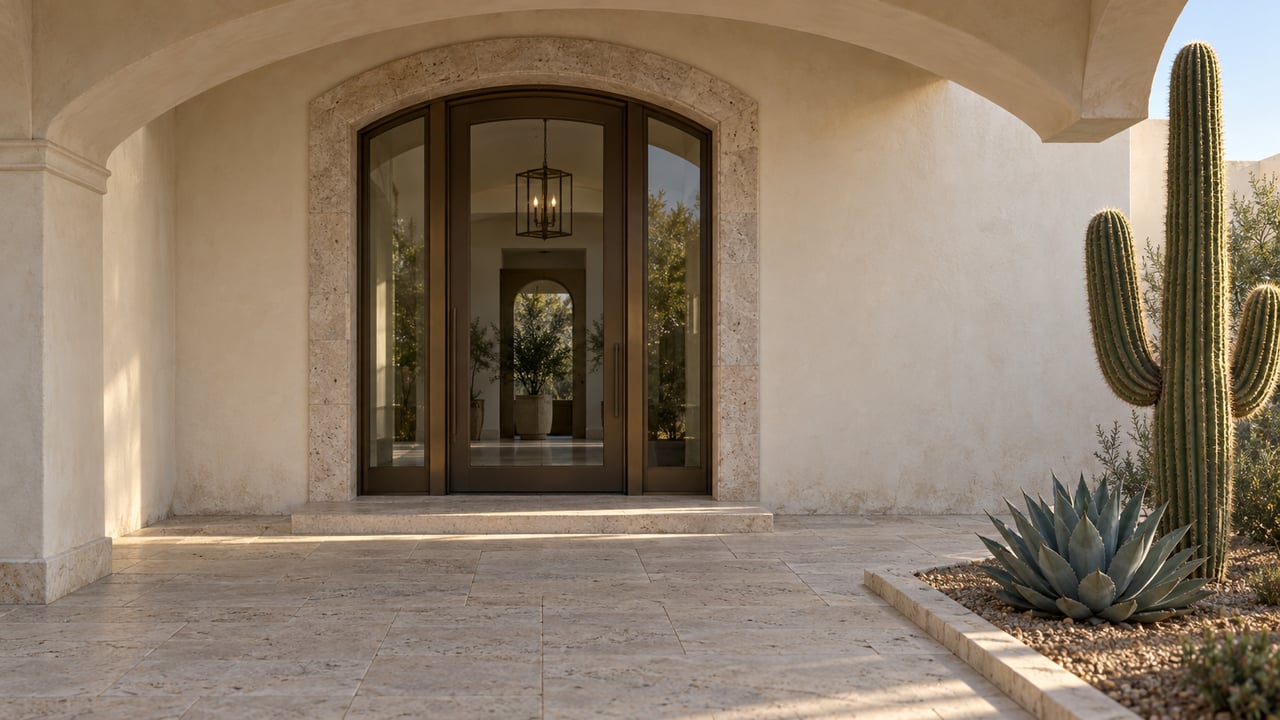
Even when a newer home feels more modern, the design goal is usually to stay compatible with the neighborhood context. Arcadia planning materials and custom home examples show that newer architecture often borrows low-slung forms, mid-century references, or Southwest-inspired cues so it does not feel out of place.
This is one reason Arcadia can feel visually varied without feeling disconnected. The homes may differ in age and style, but many still respond to the same lot patterns, landscape, and outdoor lifestyle.
Why Some Arcadia Homes Feel Newer
Not every newer-feeling home in the broader Arcadia area is a recent rebuild. Arcadia planning materials also note later subdivisions from the 1990s, including Arcadia Estates and Royal Palms Estates.
That helps explain why some homes feel more estate-like or newer than the original postwar ranch inventory. If you are house hunting, it is worth looking at both build year and renovation history rather than relying on neighborhood name alone.
How To Think About Arcadia Styles as a Buyer
The most useful way to evaluate Arcadia homes is often by renovation level, not just style label. A home described as ranch, modern, or custom can still live very differently depending on how much of the original structure remains.
Three Useful Buckets
You can often sort Arcadia homes into three practical categories:
- Original or lightly updated ranch: Usually offers simpler floor plans and older systems, with strong potential tied to lot size and setting.
- Expanded and reworked ranch: Often keeps the neighborhood feel while improving flow, storage, and livable space.
- Newer custom rebuild: Typically delivers the most contemporary layout, finishes, and architectural statement.
This framework can make your search more focused. It helps you compare homes based on lifestyle fit, future maintenance, and how much updating has already been done.
What Matters Beyond Style Name
In Arcadia, style is only part of the story. The setting often has just as much influence on value and day-to-day enjoyment.
Focus on the Lot and Landscape
Arcadia’s roots in citrus groves and estate parcels still show up in its larger lots and mature landscape. Shade, tree canopy, patio placement, and outdoor flow can shape how a home feels just as much as square footage.
A modest ranch on a great lot may appeal more to you than a flashier house with less outdoor character. That is especially true in an area where the site itself is part of the architectural experience.
Look at How Much Original Structure Remains
Two homes may both be described as remodeled, but the scope can be very different. One may preserve much of the original floor plan, while another may retain only parts of the shell.
As you compare options, it helps to ask how extensively the home was reworked. That can affect layout, systems, design continuity, and your long-term plans.
Understand Historic Status Is Property Specific
Historic status is not automatic across Arcadia. The City of Phoenix Historic Preservation Office says designated properties are listed through the Phoenix Historic Property Register and protected through Historic Preservation zoning overlay review.
The city also notes that historic properties must be at least 50 years old and retain historic integrity. If a home’s historic status matters to your decision, it is important to verify the designation at the property level.
Arcadia Is Best Seen as a Continuum
The biggest takeaway is simple: Arcadia is not one style. It is a neighborhood continuum shaped by rural estate beginnings, mid-century ranch homes, thoughtful remodels, and newer custom architecture.
That mix is part of what makes the area so compelling. You are not just choosing between old and new. You are choosing the balance of lot, layout, architecture, and lifestyle that fits you best.
If you want help narrowing down which type of Arcadia home fits your goals, gabriel petratis can help you compare options, understand what you are seeing, and move forward with clarity.
FAQs
Are most homes in Arcadia ranch homes?
- Many postwar Arcadia homes are ranch or ranch-adjacent, but the area also includes prewar estate homes, Pueblo Revival examples, remodels, and newer custom builds.
What does a classic Arcadia ranch home usually look like?
- A classic Arcadia ranch is usually one story with a low, horizontal profile, masonry walls, simple rooflines, and a strong connection to patios, shade, and outdoor living.
What changes are common in a remodeled Arcadia ranch home?
- Common updates include more open living areas, larger primary suites, added baths, better storage, improved laundry and pantry space, and stronger indoor-outdoor flow.
What do newer modern homes in Arcadia usually include?
- Newer Arcadia homes often feature cleaner lines, larger windows, open floor plans, courtyards, and materials such as stucco, wood, steel, concrete, and stone.
Does every older Arcadia home have historic status?
- No. Historic status is property specific in Phoenix and depends on designation, age, and whether the home retains historic integrity.
What should buyers focus on when comparing Arcadia home styles?
- Focus on renovation level, lot size, mature landscape, outdoor connection, and how much of the original structure remains, not just the style label alone.