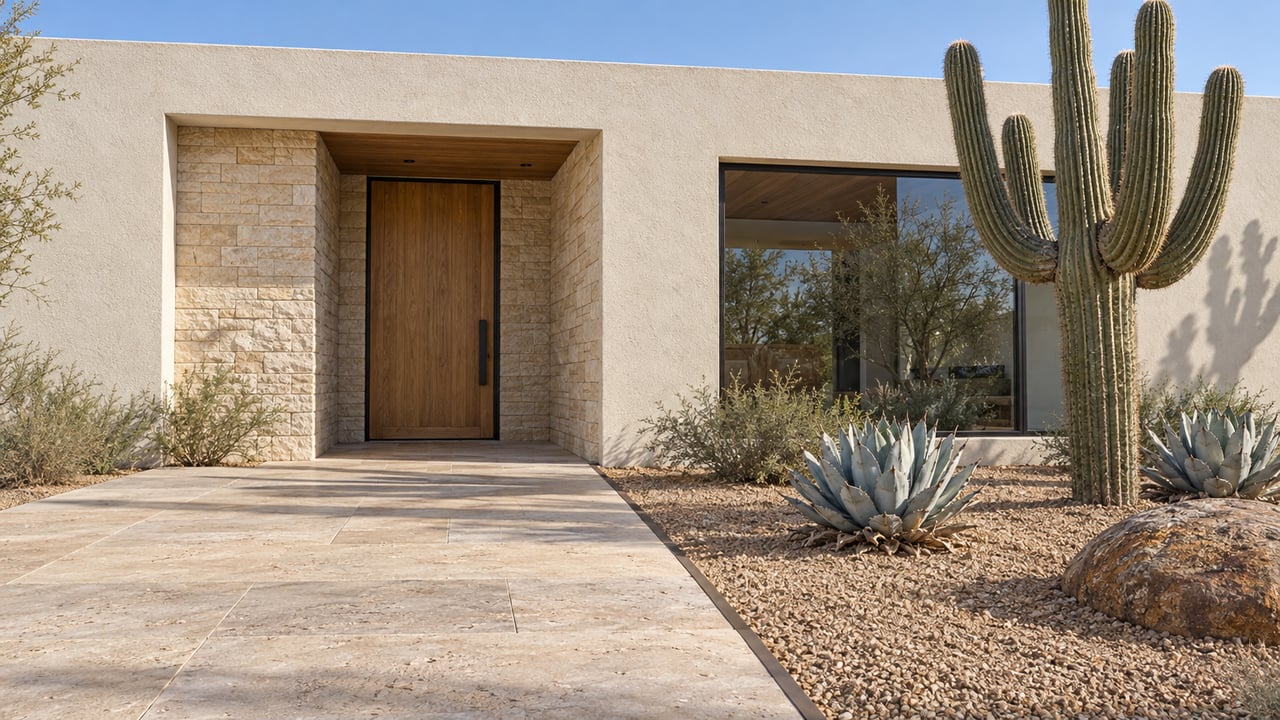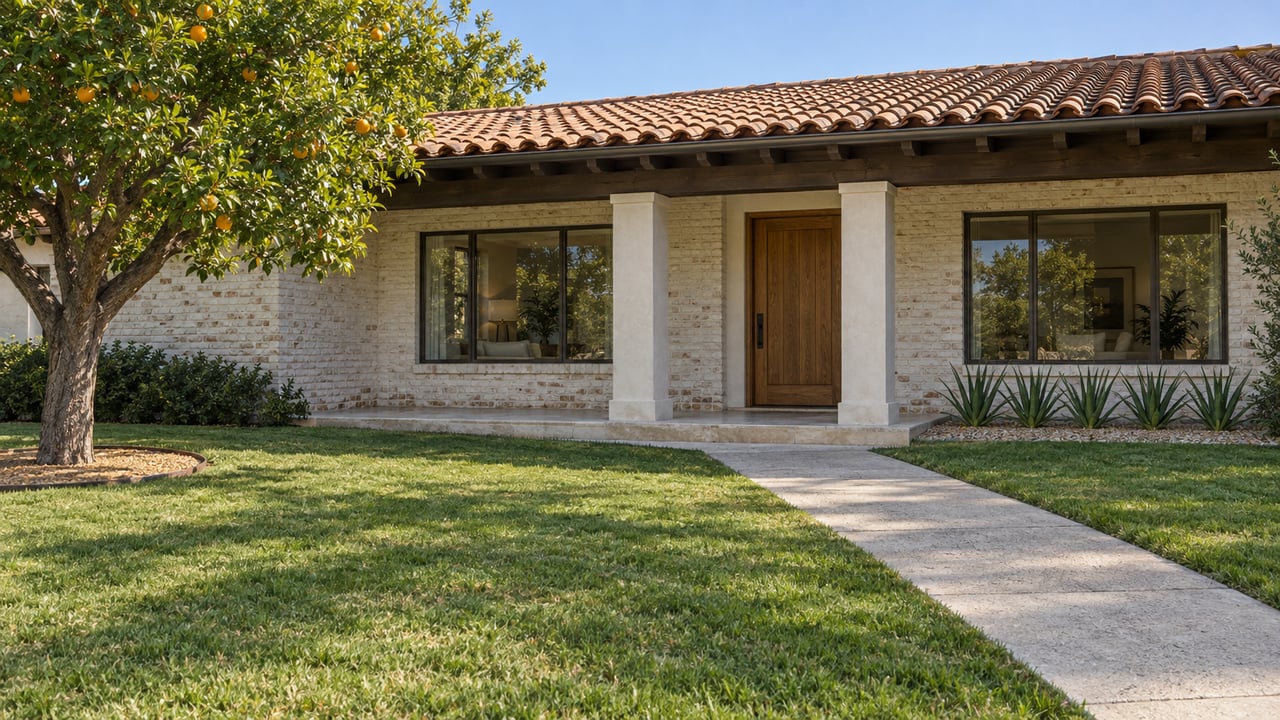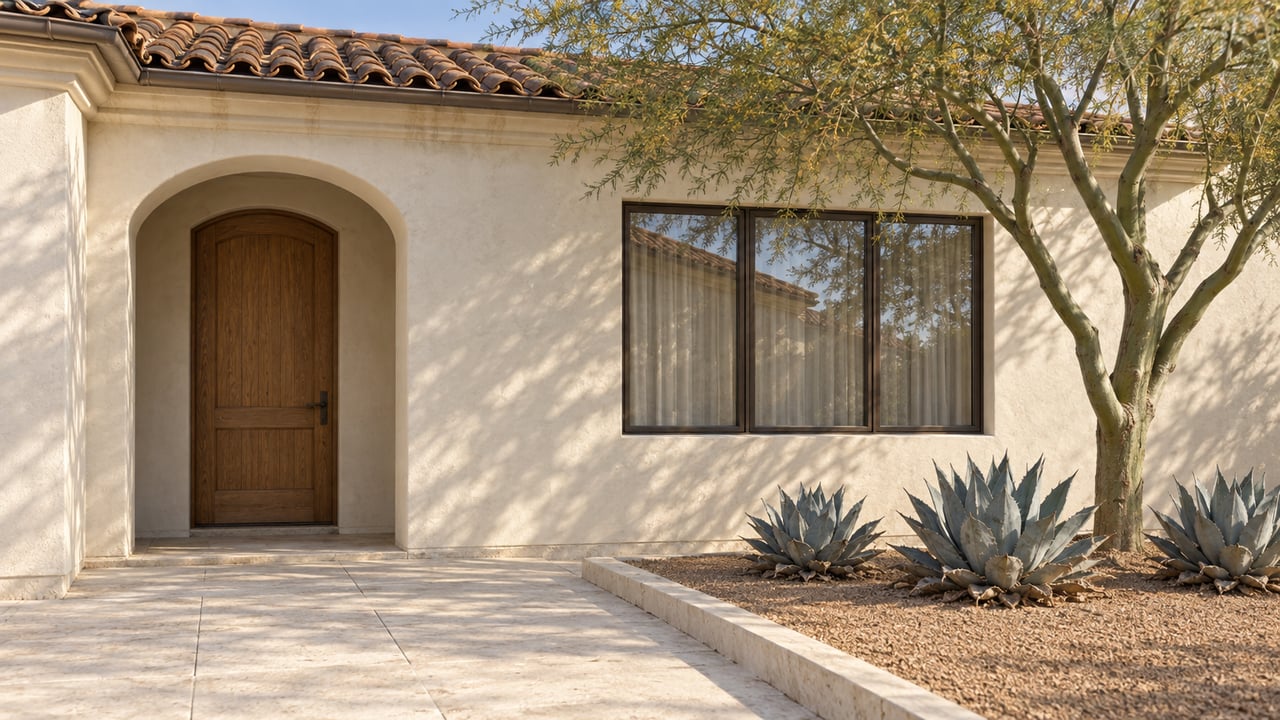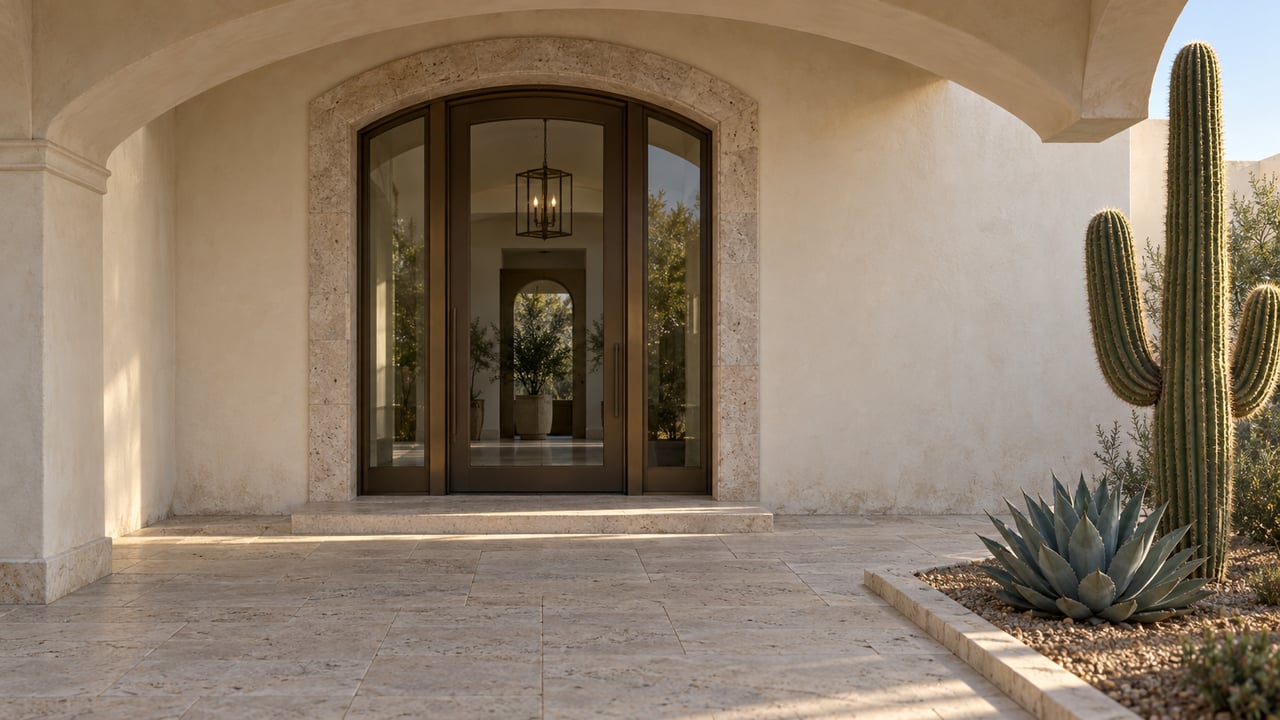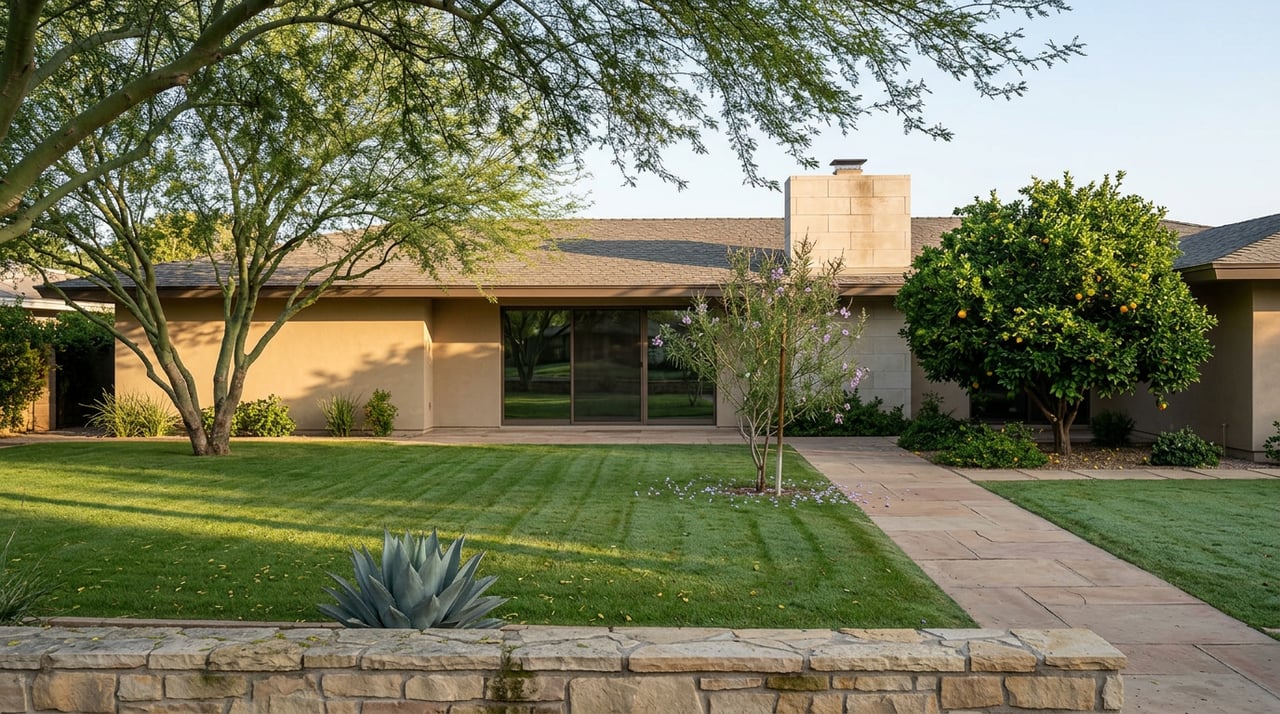
Two ranch homes sit a block apart in Arcadia, built the same year, same square footage, same quarter-acre lot in a neighborhood shaped by citrus-grove origins. One owner replaced the kitchen and re-roofed a decade ago and has stayed put. The other sold last year to a builder who tore the original structure down and finished a warm-modern rebuild this spring. On paper, both properties belong to the same market. On the county's books, they no longer belong to the same tax world at all.
That gap is not an accident of paperwork. It is the mechanism driving Arcadia's rebuild wave, and almost nobody explains it to buyers before they write an offer.
The Tax Reset Nobody Mentions at the Open House
Arizona calculates property taxes on something called Limited Property Value, not on what a home would actually sell for. Under Rule A, a property's LPV is set every year by taking the prior year's value and adding no more than 5 percent, a cap that has been in place since Proposition 117 took effect. As long as a home is only remodeled or added onto, that capped value keeps compounding forward, year after year, often landing far below current market value.
Arizona law treats new construction, along with parcel splits and changes in use, as an event that triggers Rule B instead of Rule A. Under Rule B, the assessor throws out the old capped number and resets the property's Limited Property Value using the average ratio of LPV to Full Cash Value for similar properties across the county that year, a ratio that is recalculated annually and varies by property class. The Maricopa County Assessor's own Rule B policy spells this out under Arizona Revised Statutes 42-13301 and 42-13302. In one illustrative year, 2018, the average LPV for primary residential property across Maricopa County ran about 74 percent of Full Cash Value, according to the Maricopa County Assessor's canvass data, a useful example of how much closer to current market value a Rule B reset can land compared to a Rule A number that has been capped for decades.
Buyers relocating from California sometimes assume Arizona works like Proposition 13, where the original purchase-year assessment sticks with a property for as long as an owner holds it. It does not. Arizona's system caps annual growth but resets to a market-linked ratio the moment a lot changes enough to qualify as new construction. That distinction matters most in exactly the situation Arcadia buyers face constantly: deciding whether to keep an older structure's protected, slow-growing tax base.
The land under an Arcadia ranch has been quietly outrunning the house sitting on it for years. The tax code just makes that mismatch official.
Why the Land Keeps Winning
Arcadia's oldest housing stock, largely built between 1945 and 1965, sits on lots that cannot be replicated anywhere else in Phoenix. The neighborhood grew out of 1930s citrus groves irrigated through the Salt River Project canal system, and irrigation helps keep mature trees and lawns green in a way no newer subdivision can match. Quarter-acre and larger lots, walkable proximity to Camelback Mountain, and a short run to Sky Harbor combine into a location premium that shows up in the land, not in a 1960s floor plan with patched mechanical systems.
That premium shows up clearly in ZIP code 85018's four rough price tiers as of mid-2026:
| Tier | Price range | What you're buying |
|---|---|---|
| Original-condition entry | $920K to $1.35M | Largely Arcadia Lite, west of 56th Street, unrenovated ranches |
| Renovated core | $1.35M to $2.55M | Updated kitchens and baths on quarter-acre irrigated lots |
| Teardown rebuild | $2.55M to $4.55M | Custom new construction, transitional and warm-modern styles |
| Trophy estate | $4.55M and up | Half-acre-plus lots with mountain views, pools, guest houses |
June 2026 closings across 85018 totaled 79 transactions with a median sale price of $1,545,000 and an average of $618 per square foot, up 1.8 percent year over year. Cash purchases ran roughly 34 percent of Arcadia transactions that period, well above the 18 percent cash share typical citywide, and above $3 million that cash share climbs past 50 percent. Recent notable closings included a $7.85 million new-build estate on Calle Tuberia, a $5.15 million renovated ranch on Exeter Boulevard, and a $3.75 million Arcadia Proper rebuild on Mountain View Road, a spread that shows how much the same ZIP code can contain.
Sale-to-list ratios tell a second part of the story. Across all closed Arcadia inventory, homes traded at roughly 95.1 percent of list, but renovated homes commonly closed within 2 percent of asking while teardown rebuilds gave up 6 to 14 percent after one or two price adjustments. A finished rebuild carries more risk on the way to closing than a tasteful renovation, even though the land underneath both is priced the same way.
Zoom out to the broader 85018 picture and the pattern sharpens further. Median sale price across the ZIP ran $1.7 million year to date through March 2026, up 21.6 percent from the same period a year earlier, driven largely by a heavier mix of high-end closings rather than a uniform lift. March 2026 alone posted a median of $2.23 million against $1.37 million in March 2025, a swing that reflects which homes closed that month more than what any single property gained in value. Meanwhile broader appreciation metrics for the same window showed the underlying market flattening, with months of supply up roughly 30 percent year over year and sale-to-list ratios easing to about 96.2 percent. Read together, these numbers describe a market where the middle is softening while the top, largely new construction and fully-rebuilt estates, keeps commanding premium pricing. That is a land story, not a broad appreciation story.
Arcadia Was Never a Blank Canvas
Anyone assuming a big lot means unlimited building rights in Arcadia has not met the Arcadia-Camelback Mountain Neighborhood Association. For decades this group has actively shaped what gets built and how fast the neighborhood changes. Among its documented wins:
- Blocked a proposal to widen Camelback Road to six lanes
- Got the posted speed limit on Camelback Road lowered from 45 to 40 miles per hour
- Won reclassification of 56th Street from an arterial to a collector street, which unlocked a 2017 regional grant of $120,000 to redesign the street with sidewalks and bike lanes
- Blocked a proposed bridge connecting 64th Street over the Arizona Canal to prevent cut-through traffic
- Defended against General Plan changes that would have allowed commercial and higher-density residential along Camelback Road between 44th and 64th Streets
- Monitors zoning variance requests street by street, tracking more than 80 such cases over a recent four-year stretch to watch for reduced setbacks or increased lot coverage
The association has also held a seat on the Camelback East Village Planning Committee for 16 years, a body that meets the first Tuesday of each month at the Devonshire Senior Center on East Devonshire Avenue and reviews development proposals for compatibility with the surrounding streetscape. Properties near Camelback Road carry an added layer through the Arcadia Camelback Special Planning District and the Camelback Road Overlay District, which apply their own setback, wall, and planting requirements on top of standard zoning.
This tension over rebuild pace is not new. In 2008, architect Al Beadle's own residence, White Gates, was named one of Arizona's Most Endangered Historic Places amid growing concern that Arcadia's original ranch stock was disappearing faster than the neighborhood could absorb the change, a story documented at the time by Modern Phoenix. Builders active in Arcadia today, including names like Carmel Homes, Cullum Homes, Sever Custom Homes, Bedbrock Developers, Calvis Wyant Luxury Homes, and Thomas James Homes, work inside this same governance layer on every project, and the ones who succeed tend to design rebuilds that respect the original low-roofline character rather than maximize height for its own sake.
The School Boundary Twist Buyers Miss
One more wrinkle catches out-of-area buyers who assume ZIP code and price tier tell the whole story. School assignment in 85018 splits roughly at 56th Street. East of that line, most addresses feed Scottsdale Unified School District. West of it, assignment shifts to Madison Elementary and Phoenix Union. Two homes at similar price points, a block apart, can land on opposite sides of that boundary, which makes verifying enrollment by exact address before writing an offer worth the extra step rather than relying on a general neighborhood label.
A Few Questions Worth Settling Early
What annual cap applies to Limited Property Value? It has a 5 percent annual cap.
Is this the same as California's Prop 13? No, and that assumption trips up more than a few relocating buyers. Arizona's system caps annual growth on an existing valuation, but a new-construction event resets the number to a current market-linked ratio rather than preserving a decades-old purchase-year base the way Prop 13 does.
How do I find out which side of a governance or school line a specific lot falls on? Confirm school assignment directly with Scottsdale Unified School District, and check whether a specific parcel falls inside the Arcadia Camelback Special Planning District or Camelback Road Overlay District before assuming what you can build.
Arcadia rewards buyers who do this kind of homework before they fall in love with a lot. If you're weighing a renovation against a full rebuild, or trying to figure out what a specific parcel is really worth once the land and the tax math are separated from the house sitting on it, Rounds Petratis Legacy Group works this exact market street by street, and Gabriel Petratis in particular has built his recent track record on Arcadia and Scottsdale's luxury rebuild and resale segment. Start with a free home valuation to see where your lot actually sits before you decide what to do with it.
This article is general information, not legal, tax or financial advice. Consult a qualified professional about your situation.